Aspen Airport is open all winter. Flying in summer 2027? Plan around the closure.
 0
0
Your Favorites
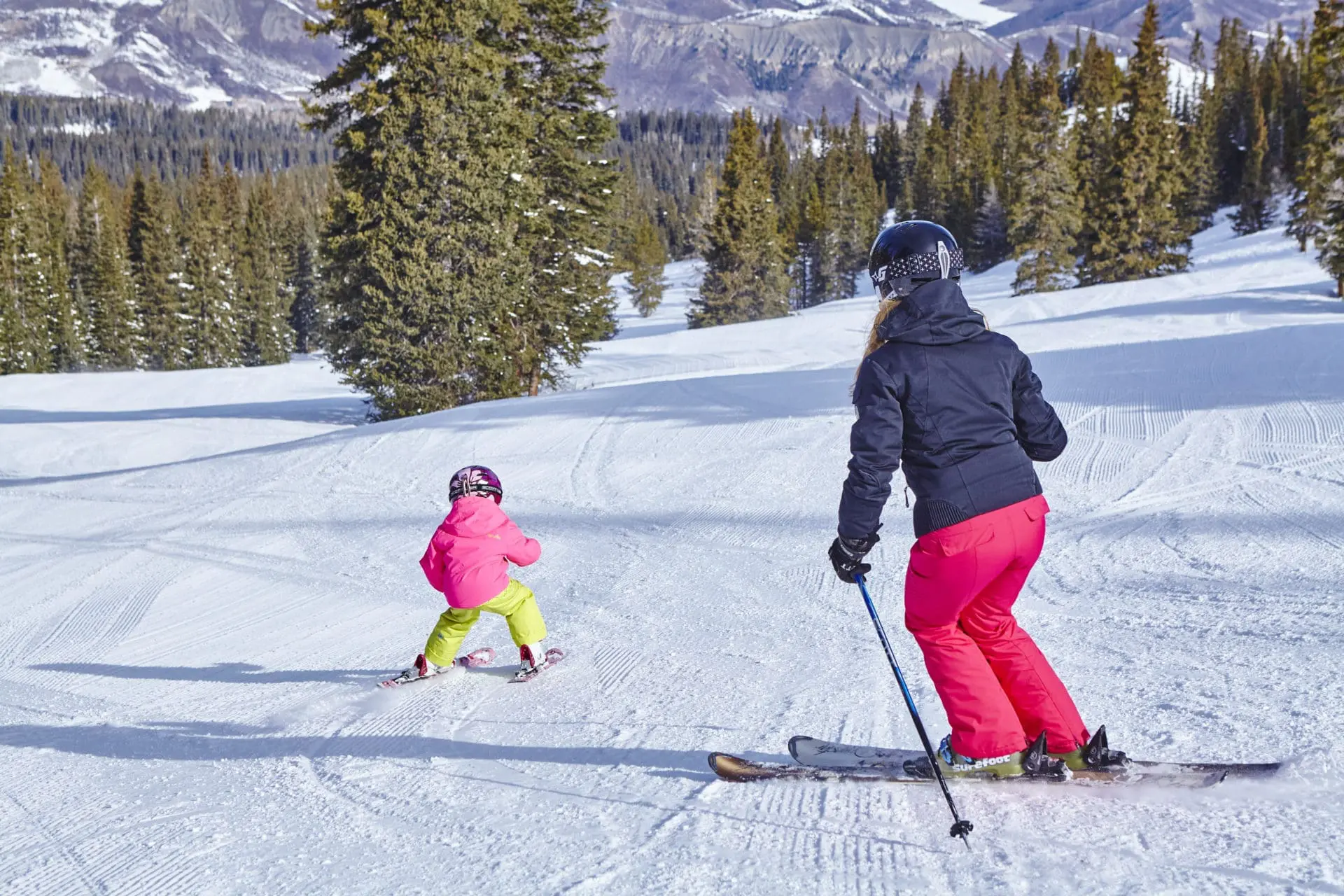
Learning how to ski is not about conquering the mountain. It’s about learning how to work with gravity, terrain, and your own body in an unfamiliar environment. For many first time and beginner skiers, the challenge isn’t strength or coordination. It’s understanding what skiing is actually asking you to do.
Unlike many sports, skiing places you on a moving surface, asks you to balance while sliding downhill, and requires decisions to be made continuously rather than in short bursts. That combination can feel overwhelming when you’re first learning how to ski, but it doesn’t have to be.
Here in Snowmass, Colorado, we’ve been helping beginners learn how to ski since 1967. We know a thing or two about first time skiing and helping newcomers get comfortable on the mountain. You can see that experience in how we’ve built and groomed the mountain.
Colorado’s famous powder, over 300 days of sunshine per year, and consistently groomed terrain create ideal conditions for learning how to ski.
Our wide runs, gentle pitches, and a culture of instruction-first progression allow beginner skiers in Snowmass to focus on learning instead of survival during their first time on the slopes.
Snowmass isn’t simply a place where beginners can learn how to ski; it’s a mountain intentionally designed to help beginners succeed (and have fun in the process!).
If you’re researching how to ski, you’re likely looking for something more than surface-level tips and tutorials. You want to understand what to expect, how long things take, and how to progress without unnecessary fear.
Our guide is written with that exact mindset. We’re giving you the context, strategy, and practical understanding that most beginner ski articles and tutorials skip.
First Time Skiing Pro Tip: If you’re a beginner learning how to ski for the very first time, we highly recommend signing up for lessons. This is invaluable to creating a strong foundation and will make your trip to the slopes that much more fun.
When it comes to your first time learning how to ski, these are the things we always recommend keeping in mind. Plan your trip around these little nuggets of advice, and the learning process will be so much more seamless (and fun!).
Snow conditions play a major role in beginner safety and progression. Groomed snow provides the most predictable surface when learning how to ski, which allows your skis to respond consistently.
This predictability is critical when learning how to balance, stop, and turn on the slopes. Powder snow, while softer to fall in, requires more strength and balance and can slow skill development early on.
Icy conditions magnify mistakes and can quickly erode confidence, especially for beginner adults learning how to ski for the first time. This is one of the many reasons we love Snowmass as a skiing destination for those first learning how to ski. Colorado’s dry climate and reliable snowmaking mean icy conditions are far less common here than what you’d experience on the East Coast.
Visibility is also an underestimated factor. Flat light, which is common on overcast days, reduces contrast, making it difficult to see changes in slope angle. Beginners often tense up in these conditions, which increases fatigue. When visibility is poor, slow down and ski near trail edges where contrast is better.
The perk? Skiing in Colorado often means bluebird days, with sunshine making it easier to read terrain and stay relaxed.
Morning snow tends to be firmer and more consistent, offering clearer feedback from skis. The corduroy pattern left by groomers provides visual reference points that help beginners understand how their skis are tracking.
Afternoon snow can soften and become uneven, demanding more energy and balance. Skier traffic creates moguls and ruts on popular runs. For first time skiing experiences, planning your most technical practice for morning hours can dramatically improve your efficiency when learning how to ski.
Pro Tip: Snowmass’s variety of beginner terrain allows skiers to adjust their day based on both conditions and energy levels.
And once you’ve wrapped up your lesson and put your skis away, Snowmass has plenty of great apres ski dining options you can enjoy, so the fun doesn’t have to stop when you leave the slopes.
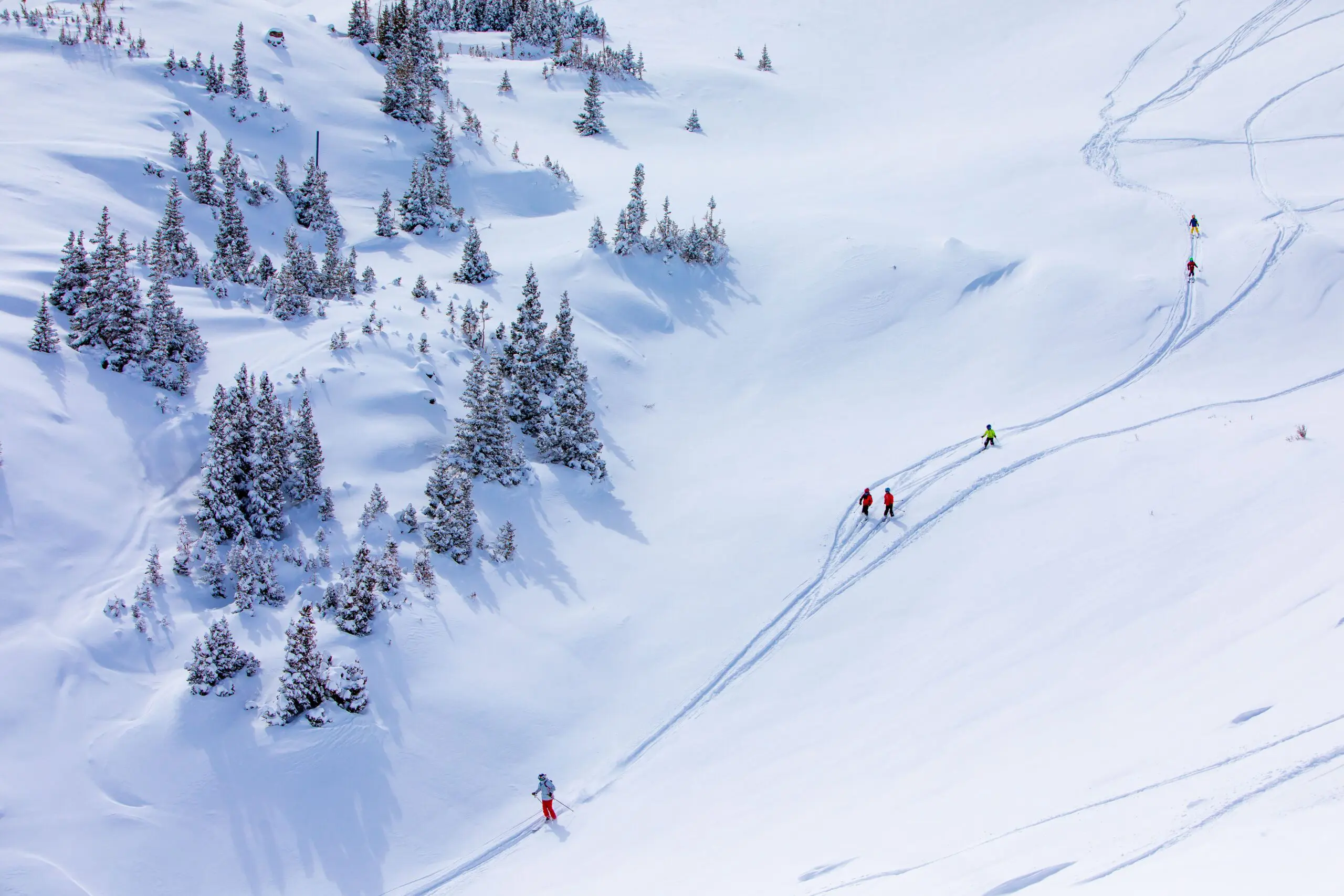
Slope etiquette is one of the most overlooked aspects of learning how to ski, yet it plays a major role in both safety and confidence, especially for beginners and first time skiers.
Understanding how skiers interact on the mountain can help you feel less anxious and more in control during your first time skiing.
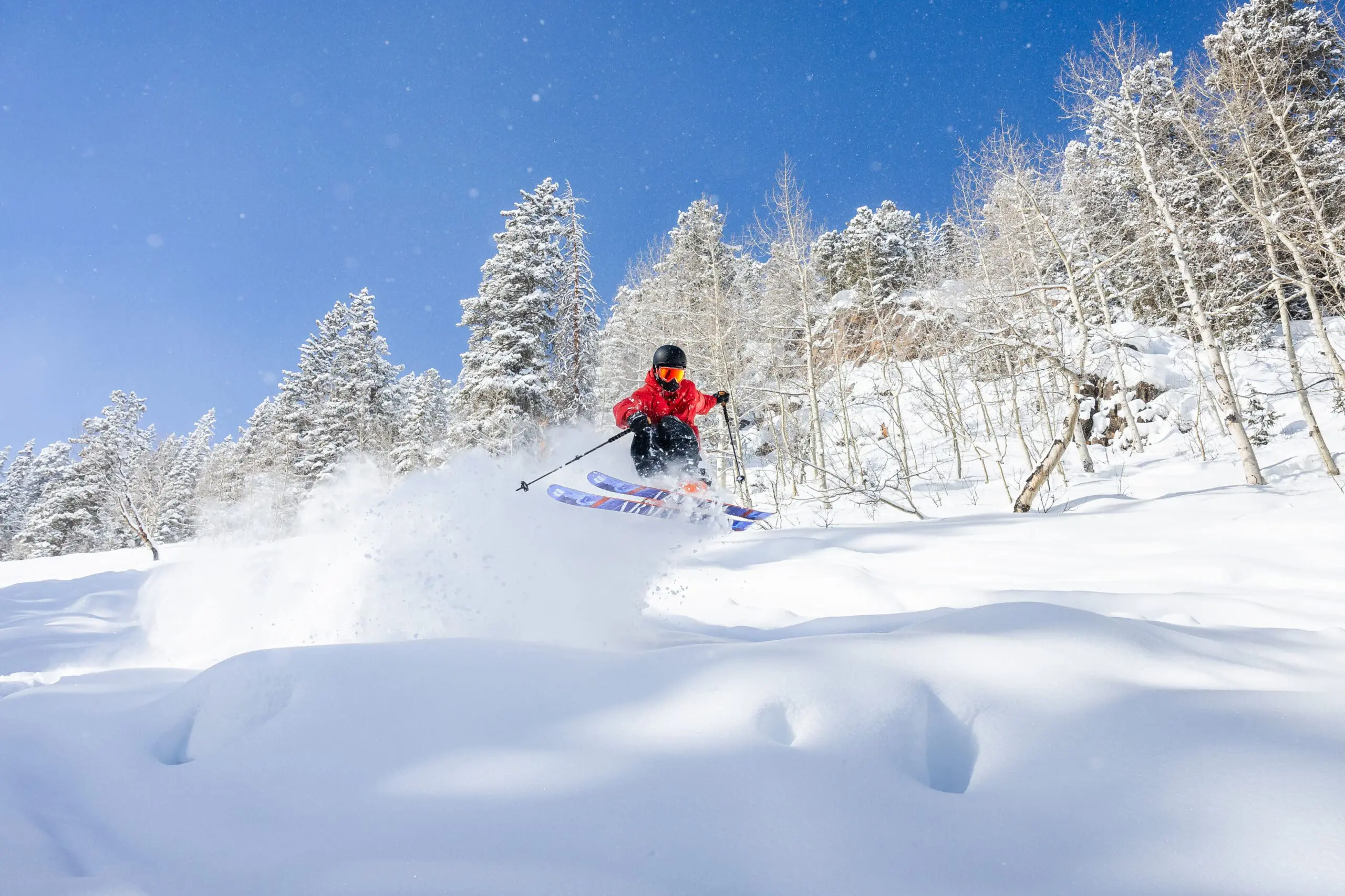
Learning how to ski is most effective when skills are introduced in a logical progression. Beginners often struggle because they try to learn too many things at once. Our ski tutorial follows the same progression our instructors in Snowmass use to build competence, without overload.
Balance is everything when you’re learning how to ski. A proper stance places your weight over the middle of your skis, with ankles flexed, knees soft, hips stacked over your feet, and hands forward and visible. This position gives your skis the chance to respond to changes in terrain on the slopes.
At Snowmass, first time and beginner skiers often start on Assay Hill or the Elk Camp learning area, where gentle terrain lets you focus entirely on stance without worrying about speed. The wide, forgiving pitch gives you room to experiment with weight distribution.
A common mistake beginner skiers and first timers often make when learning how to ski is leaning too far back. This instinctive reaction feels safer, but it actually reduces control.
When weight shifts to the heels, skis become harder to turn and stop. Your shins should maintain light, consistent pressure against the tongue of your boot. This forward position feels unnatural at first but becomes second nature with practice.
Troubleshooting Tip: If you constantly feel like you’re falling backward, your boots may be too loose. Make sure your boots are properly buckled and focus on keeping your hands visible in front of you, as this naturally brings your weight forward. This is why getting fitted at a ski rental shop is so important.
Before turning comes sliding. Gliding straight teaches balance and allows beginners to feel how skis interact with snow. Start on very gentle terrain where you can glide a short distance without gaining speed.
On Snowmass runs like Assay Hill, you’ll find the perfect pitch for practicing your first glides as you learn how to ski. The consistent grade means you won’t suddenly speed up, and the wide-open space gives you room to focus on balance.
Stopping is introduced through the snowplow (or wedge), which creates friction by angling skis inward to form a “pizza slice” shape.
Push your heels apart while keeping your ski tips close together. Apply equal pressure to the inside edges of both skis by rolling your ankles and knees slightly inward.
If stopping feels inconsistent, it’s usually because pressure is uneven between skis. Many beginners and first time skiers favor one leg without realizing it, causing them to turn rather than stop. Equal pressure, patience, and controlled movements, not force, lead to reliable stopping.
Troubleshooting Tip: If your skis keep turning instead of stopping, check that you’re applying pressure equally to both legs. Practice shifting your weight evenly by thinking about pressing both big toes down simultaneously.
Turning is where many beginners struggle when first learning how to ski. Turns are not created by twisting skis or swinging arms. Instead, they come from shaping the skis through subtle edging and weight transfer.
Once you’re comfortable on Assay Hill, runs like Funnel provide slightly more varied terrain to practice turning. The wider sections give you space to make mistakes, while the gentle, consistent pitch means you can focus on technique rather than speed control.
From your snowplow position, to turn right, apply slightly more pressure to your left ski (the outside ski of the turn). To turn left, apply more pressure to your right ski. Your skis will naturally arc in the direction you want to go.
A helpful mental model when learning how to ski is to imagine your skis drawing arcs in the snow. Let the skis do the work. Your job is to direct them with subtle pressure changes, not to force them into position.
Troubleshooting Tip: If your turns feel jerky or you’re skidding sideways, you’re likely rotating your shoulders. Keep your hands forward and your upper body facing down the hill. Think about steering with your feet and ankles, not your torso.
When learning how to ski, one of the most advanced beginner skills is terrain management. Choosing wide, gentle slopes allows speed to remain manageable without aggressive braking.
Snowmass’s long green runs like Assay Hill and Max Park are intentionally designed to support this learning phase, allowing beginners to practice their skiing technique without constant speed control stress. These runs give you several hundred vertical feet to work with, so you can focus on linking multiple turns rather than just surviving one at a time.
Resist the urge to immediately move to steeper terrain like Powderhorn or the upper mountain. Building skills on appropriate slopes creates a stronger foundation when learning how to ski for the first time. When a run feels comfortable and your turns are consistent, that’s when you’re ready for slightly more challenging terrain.
Once turning and stopping feel reliable, linking turns builds rhythm and flow. Instead of completing a turn, stopping, then starting another turn, try to transition smoothly from one turn into the next. This creates an “S” pattern down the hill.
Runs like Dawdler and Max Park at Snowmass are perfect for practicing linked turns. The consistent pitch and width mean you can establish a rhythm without worrying about sudden terrain changes or narrow choke points.
At this stage, consistency matters more than speed. Smooth transitions reduce fatigue and allow movements to become automatic. Focus on maintaining the same turn shape and rhythm on each turn.
Troubleshooting Tip: If you can’t maintain rhythm, you may be trying to turn too quickly. Give each turn time to develop. Count slowly in your head to establish a steady pace.
For hands-on beginner instruction that reinforces these skills, Snowmass offers structured learning programs, so you can learn how to ski with confidence.
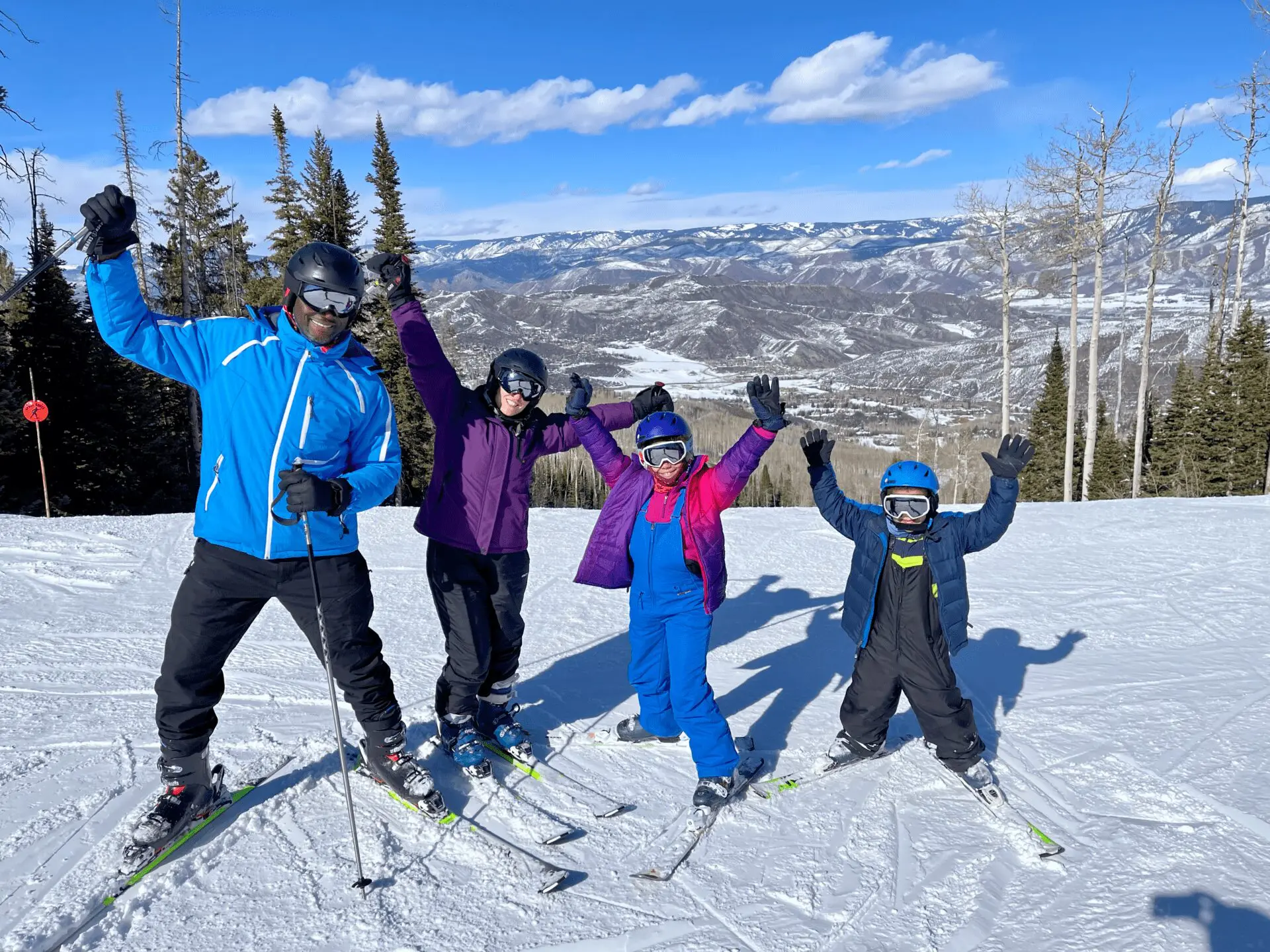
Most skiers experience a noticeable breakthrough between days three and five of learning how to ski, once muscle memory begins to form and movements require less conscious effort. Here’s what realistic progression looks like:
Snowmass Pro Tip: If you’re feeling a little tired from learning how to ski, give yourself a break at swing by for Snowmass s’mores. It’s the perfect sweet treat to celebrate all the work you’ve put in.
The moment most people want to quit typically comes on day two or three, when progress feels invisible, and discomfort is highest. Pushing through this phase separates those who become skiers from those who tried skiing once.
Set achievable, specific goals for each day rather than comparing yourself to others.
If you’re skiing in Snowmass, this might look like: conquering Assay Hill without stopping on day two, linking turns all the way down. Funnel on day three, or riding the Big Burn chairlift confidently by day four. These specific, achievable milestones are what make learning to ski in Colorado, and at Snowmass in particular, so rewarding.
Our beginner terrain is designed with progression in mind. Runs like Dawdler and Max Park provide the perfect gentle pitch for first timers, while Sheer Bliss and High Alpine offer that next step up when you’re ready.
Celebrate small victories when learning how to ski: a smooth stop on Assay Hill, a confident turn on Funnel, completing Big Burn without falling. These increments matter more than dramatic leaps in ability, and having specific Snowmass runs to “check off” gives you tangible proof of your progress.
Where To Celebrate: For the ultimate snow adventure, it doesn’t get better than snowmobiling. And if you’re looking to get indoors after a long day of learning how to ski, we love bowling as a change of pace the entire family will love.
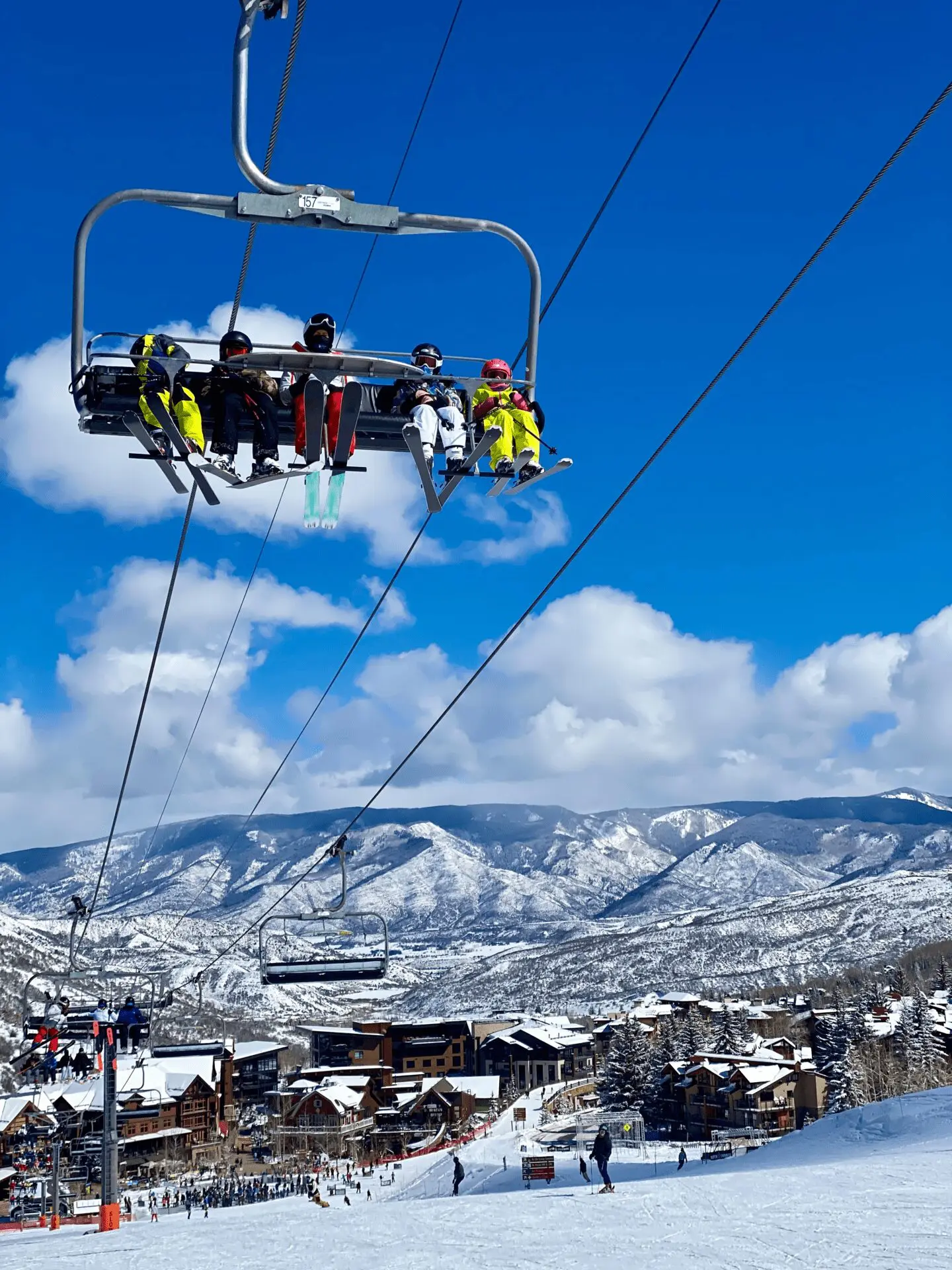
Fear is not a weakness in skiing. It’s information. Learning how to ski involves speed, height, and unfamiliar movement patterns, all of which trigger natural stress responses, especially for beginners or first time skiers. Ignoring fear doesn’t make it disappear; understanding it does.
Confidence builds through repetition on manageable terrain, not by forcing progress. Every time you complete a run successfully, your brain logs that experience as evidence that you can do this.
Visualization techniques help accelerate the process of learning how to ski. Before skiing a run, stand at the top and mentally rehearse it. Picture yourself making smooth turns, maintaining balance, and finishing confidently.
Set small, achievable goals when learning how to ski; goals that you can accomplish within a single run. “I will make five linked turns” is more useful than “I will become a good skier.” When you achieve these micro-goals, acknowledge and celebrate them.
Controlled breathing is one of the most effective tools for managing skiing anxiety. When you notice fear rising, deliberately slow your breathing: four counts in, hold for seven, eight counts out. This slows your nervous system and improves focus.
Fear of speed can be managed through terrain choice and technique. Remember that you control your speed through turn shape. Rounder, more complete turns naturally slow you down.
Fear of falling is often the biggest psychological barrier for adult beginners learning how to ski. Here’s a truth that helps: you’re going to fall, and that’s okay. Most falls at beginner speeds on groomed snow are harmless. The anticipation of falling is usually worse than the actual fall.
Embarrassment is perhaps the most universal concern among adults learning how to ski for the first time. You feel conspicuous, slow, and incompetent while others glide past effortlessly.
Here’s what helps: realize that everyone on the mountain was once exactly where you are. Those confident skiers you see? They all spent days wobbling down bunny hills. Most skiers have tremendous respect for beginners who are putting in the effort to learn how to ski. And here in Colorado, we have a culture of kindness that encourages beginners just getting into skiing.
Snowmass’s learning areas are designed to normalize beginner progression, helping new skiers feel supported, rather than exposed. The beginner zones are populated with people at similar skill levels, creating an environment where everyone is learning together.
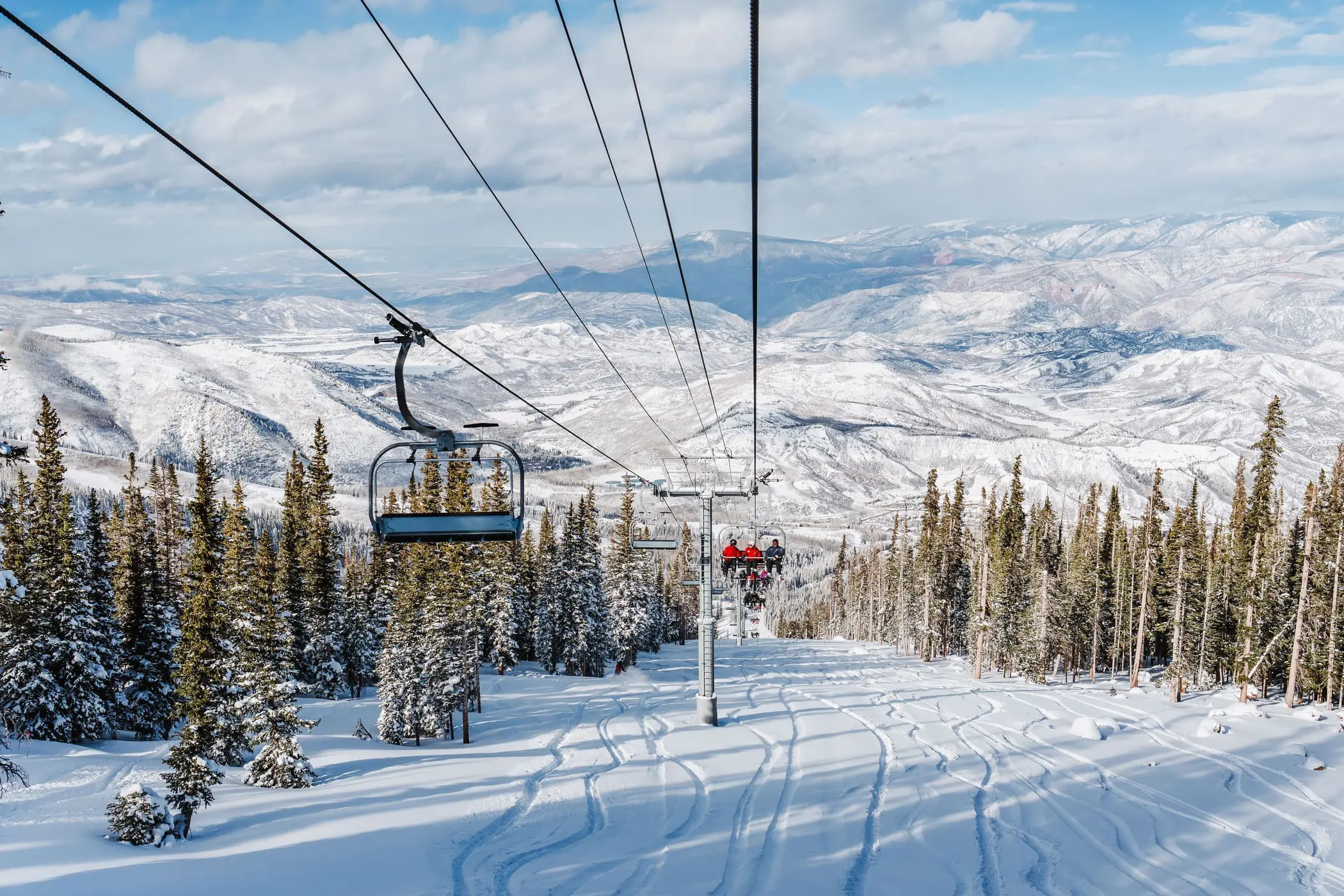
After your first lesson or ski tutorial, progress depends on consistency and intentional practice. The transition from “took a lesson” to “can ski confidently” requires deliberate effort, but it doesn’t require constant professional instruction.
Returning to the same terrain reinforces muscle memory. Your body needs repetition to internalize new movement patterns. At Snowmass, this might mean skiing Assay Hill or Funnel five times in a row. Skiing the same run multiple times is not boring. It’s how learning happens, and Snowmass’s beginner terrain is designed to make that repetition enjoyable rather than monotonous.
Focus on one or two specific elements from your skiing lesson or ski tutorial rather than trying to remember everything. If your ski instructor at Snowmass Ski & Snowboard School emphasized keeping your hands forward, make that your focus for an entire session on Max Park. This targeted practice is far more effective than vaguely trying to “ski better.”
Several simple drills can accelerate your skiing progression between lessons. Snowmass’s wide, forgiving green runs like Dawdler provide the perfect practice ground for these techniques:
Exaggerated Weight Shifts: While traversing across Assay Hill, deliberately shift your weight from ski to ski. This helps you feel the difference in pressure and builds the foundation for parallel turns.
Garland Turns: On runs like Funnel, start traversing across the slope, make a small turn toward the fall line, then turn back to your traverse. Repeat this pattern across the slope. This drill teaches turn initiation without the commitment of completing full turns.
One-Ski Balance: On very gentle terrain like the bottom section of Max Park, practice briefly lifting one ski slightly off the snow while the other ski tracks straight. This builds balance and confidence.
When it comes to effectively learning how to ski, it’s important to note that off-snow conditioning significantly improves on-snow learning. The elevation at Snowmass (base area sits at 8,104 feet) makes physical fitness even more valuable, as your body works harder at altitude.
Squats and lunges build the leg strength necessary for holding a skiing stance.
Balance exercises, like standing on one leg or practicing on an unstable surface, strengthen the stabilizer muscles skiing requires.
Hip flexor stretches, calf stretches, and general lower-body flexibility work help you achieve and maintain proper skiing positions.
Skiing Beginner Pro Tip: If you’re visiting Snowmass from a lower elevation, arrive a day early if possible to acclimate. Stay hydrated and listen to your body. Altitude can amplify fatigue, making those rest days even more important.
And when you’re ready for some off-the-slopes ski training, the Snowmass Village Recreation Center is the perfect spot to get in those reps.
You’re ready for blue terrain when you can link turns consistently for an entire green run without stopping, control your speed through turn shape rather than constant braking, and feel confident rather than relieved at the bottom of runs.
At Snowmass, the natural progression is typically: Assay Hill → Funnel → Max Park/Dawdler → Adam’s Avenue (your first blue) → Alpine Springs. Adam’s Avenue is one of Snowmass’s most beginner-friendly blue runs, with consistent pitch and wide-open spaces that don’t feel intimidating. It’s the perfect “first blue” for skiers making the leap from green terrain.
Start with blue runs marked as “easiest blue” or runs like Lower Big Burn that have short blue sections with green alternatives. This allows you to test yourself without committing to overwhelming terrain.
Using Snowmass trail maps to visualize progression helps maintain realistic expectations when learning how to ski.
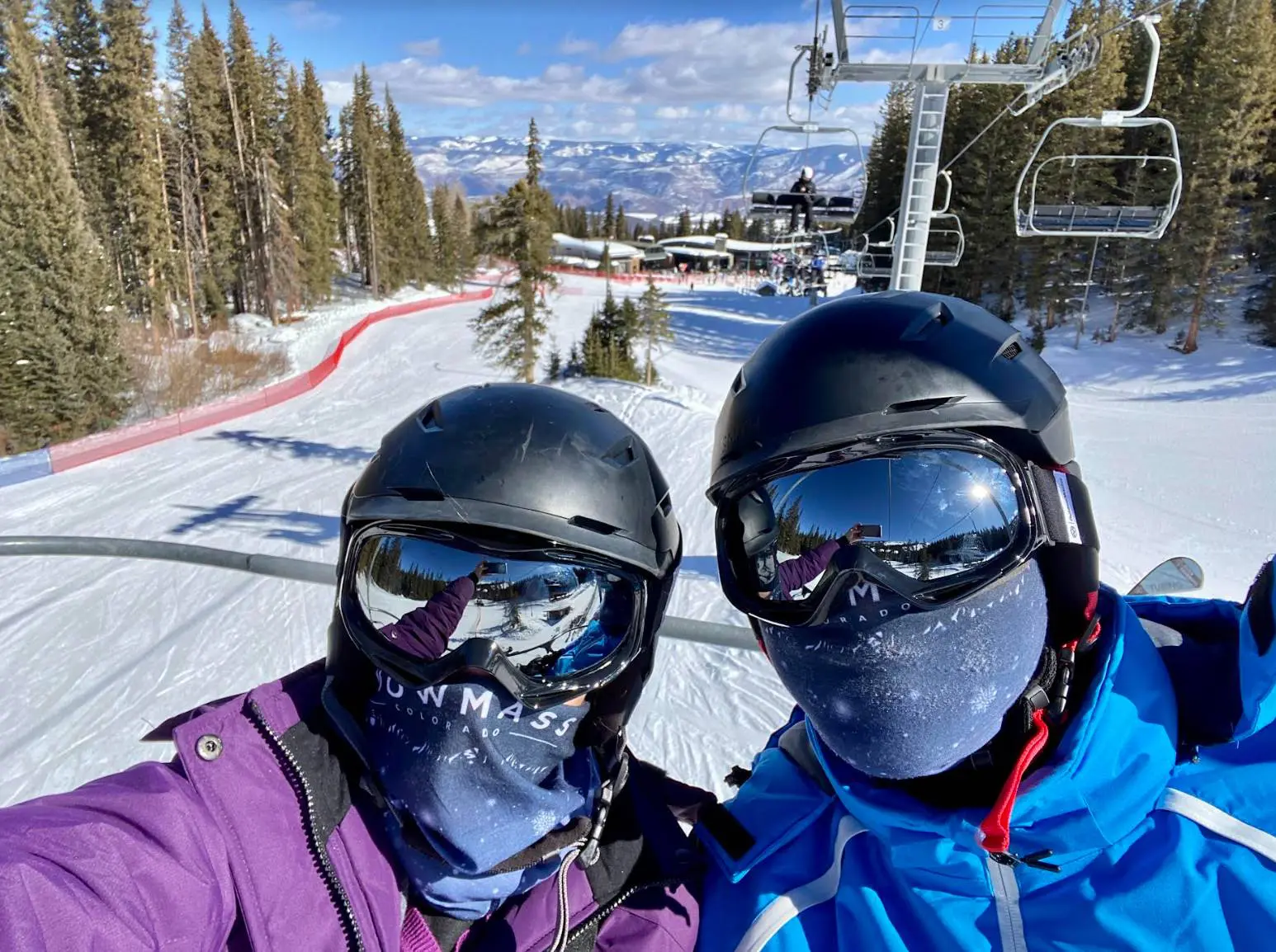
Every beginner or first time skier wonders whether they’re progressing “normally.” These questions are universal, and understanding typical timelines helps remove unnecessary pressure from the process of learning how to ski.
Most adults learning how to ski for the first time develop basic control (e.g. making wedge turns and stopping reliably) within one to three days of focused practice. Reaching a point where skiing feels comfortable rather than stressful typically takes five to seven days spread across multiple trips.
The timeline varies based on several factors. Physical fitness, particularly leg strength and core stability, accelerates the process of learning how to ski.
Prior experience with balance-based sports like skateboarding, snowboarding, or ice skating provides transferable skills.
Mental approach matters enormously: beginners who can manage fear and maintain patience progress faster than those who let anxiety dominate.
Whether learning how to ski is difficult depends largely on your expectations and approach. The physical movements themselves are not complex. Skiing requires less technical precision than many sports.
What makes learning how to ski challenging is the unfamiliar environment: you’re standing on a slippery surface, moving downhill, wearing awkward equipment, in cold conditions, with other skiers moving around you.
Beginner Skiing Pro Tip: Choosing a ski destination like Snowmass, with well-groomed runs and high-quality dryer snow (which means less icy terrain) is key for first timers learning how to ski.
Children typically learn how to ski faster. They have lower centers of gravity, less fear of falling, and remarkable physical adaptability. A child can often make their first turns on day one and be skiing green runs confidently by day two or three.
Adults learning how to ski progress more methodically. Physical adaptation takes longer, and adults typically have a bit more fear than kiddos. However, they do have cognitive understanding advantages. They can visualize movements, understand cause and effect, and self-correct based on feedback.
Neither age learns “better”. They simply learn how to ski differently. Kids get comfortable faster; adults develop technique more deliberately. That’s one of the things we love about learning how to ski in Snowmass: unlike some of the more challenging ski destinations throughout Colorado, Snowmass Mountain is built for beginners of all age levels.
Proper equipment makes learning how to ski a lot more comfortable and effective. When you’re a beginner skier, the comfort and fit of your gear matter more than fancy performance features.
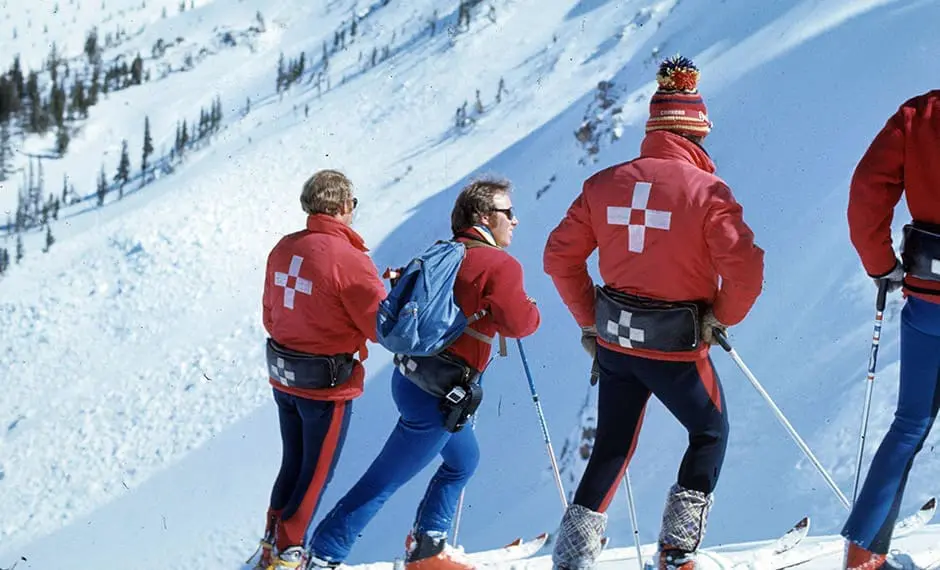
When it comes to skiing safety, opt for bright colors so ski patrol (and other skiers) can easily see you as you make your way down the slopes. Bright reds, oranges, yellows, and pinks stand out against white snow, especially in poor visibility.
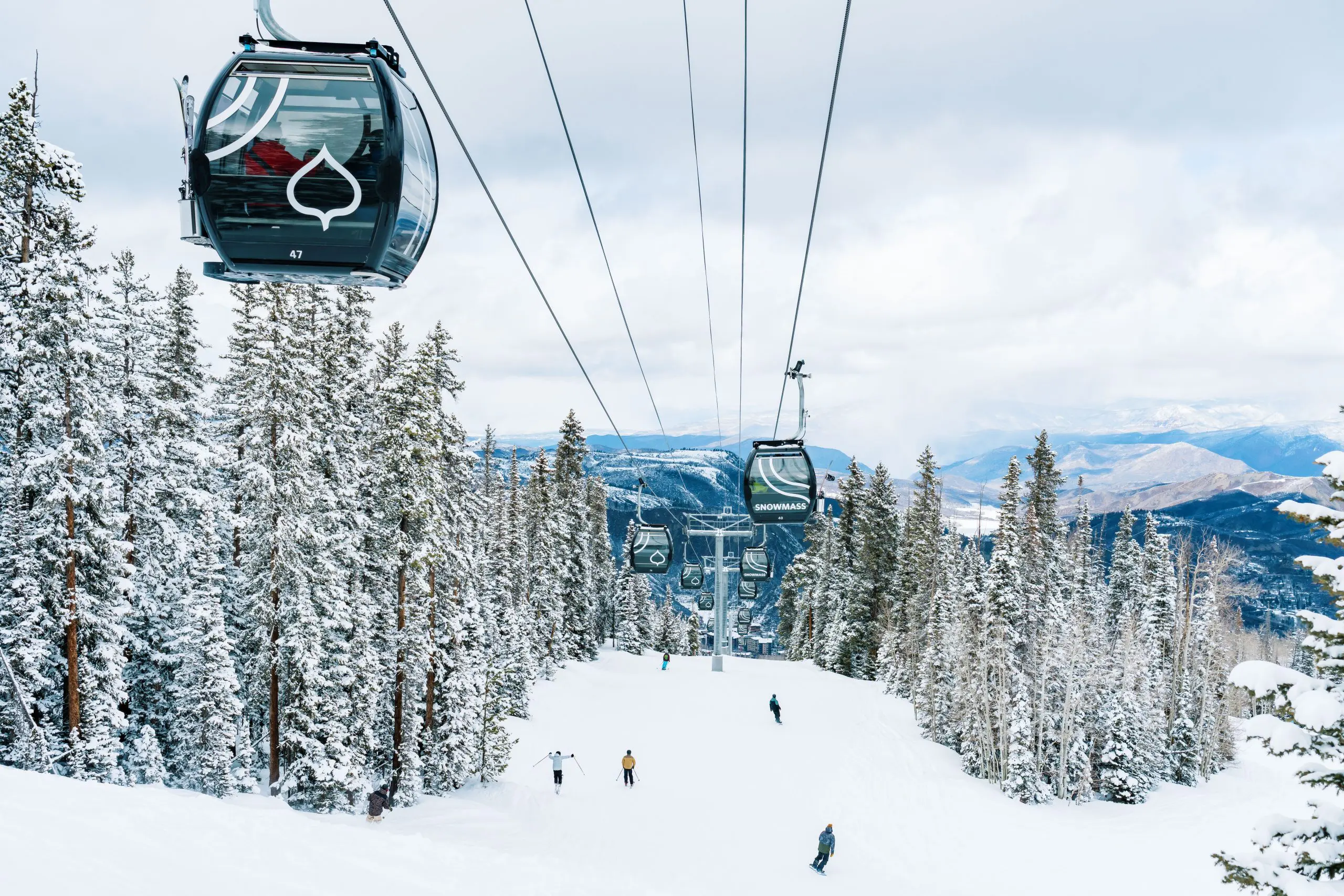
Renting is often a good choice for beginners, especially if it’s your first time learning how to ski. Just as you would with any other sport, you want to get acclimated with it and ensure it’s something you love before investing in gear.
Colorado’s climate also makes renting practical when you’re first learning how to ski. Snowmass’s dry air means less moisture buildup in boots and bindings compared to coastal resorts, so rental equipment stays in better condition.
At Snowmass, there are plenty of rental shops that can help you find the right gear for your first time on the slopes. Staff can adjust bindings, recommend appropriate ski lengths for your height and ability, and swap out equipment if something doesn’t feel right, which is critical when you’re first learning how to ski.
As skills improve, equipment needs can change quickly. What works when it’s your first time skiing may feel limiting as you advance. If you’re in the intermediate skier camp, buying gear can be an excellent choice. Luckily, there are plenty of outdoor retailers in Snowmass that can help you purchase the gear you need to level up as you learn how to ski.
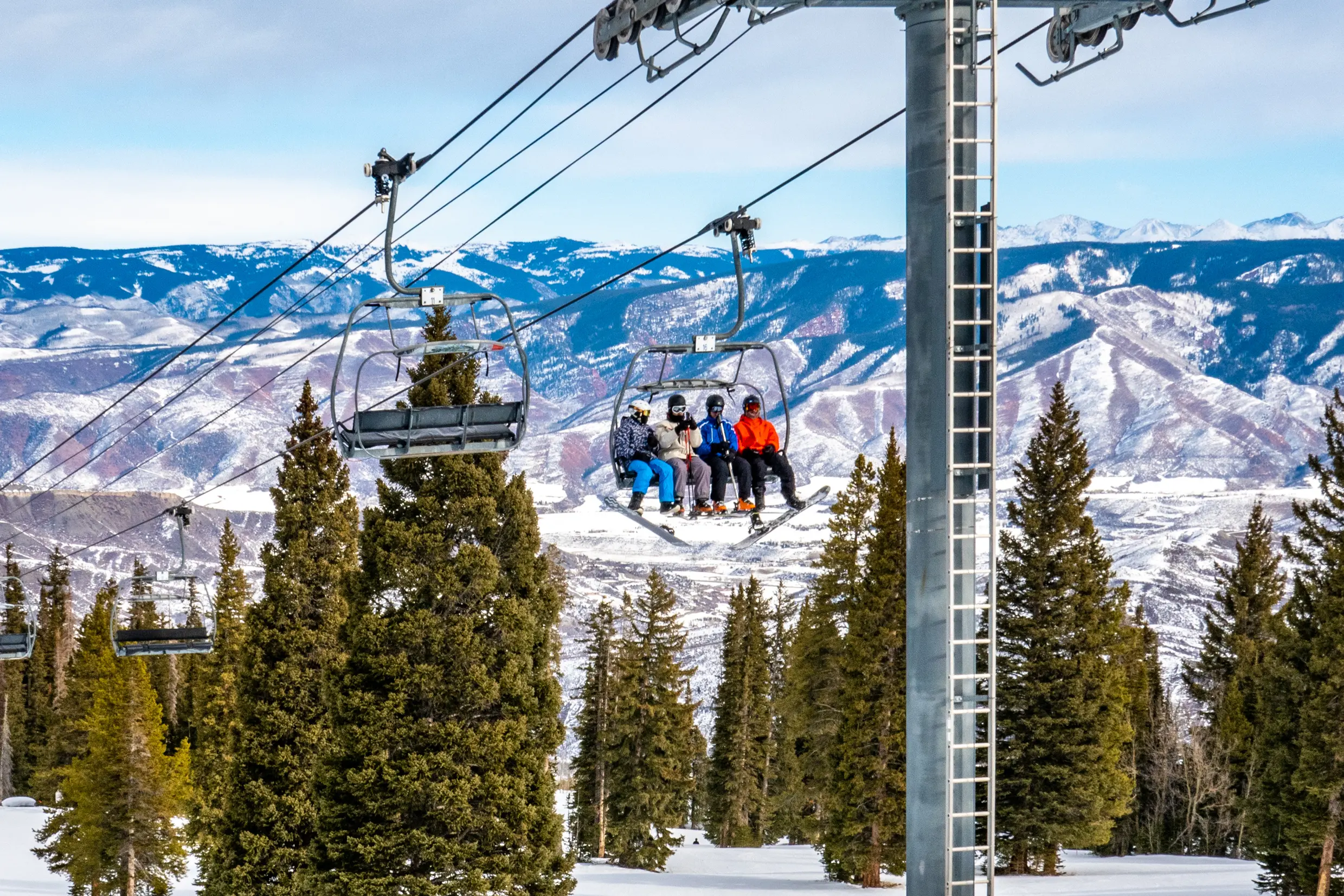
While we may be biased, the reality is Snowmass stands out among winter destinations because it removes unnecessary barriers to the learning process for beginner skiers.
The mountain was designed with first time skiers in mind, creating an environment where learning how to ski feels achievable rather than overwhelming.
Terrain Design: Snowmass features over 3,300 acres of skiable terrain, with 5% dedicated green runs and 48% blue runs on the mountain, meaning there’s extensive beginner and early-intermediate terrain to grow into. The beginner area, Elk Camp, offers wide-open slopes with gentle, consistent pitches perfect for first time skiing.
Snow Quality: Colorado’s famous powder and consistent snowmaking capabilities mean reliable, quality snow conditions throughout the season. Grooming standards are exceptionally high, providing the smooth, predictable surface beginners need.
Expert Instruction: Snowmass Ski & Snowboard School is one of the largest and most respected in North America. Instructors are trained specifically in beginner progression psychology and technique.
Beginner-Friendly Infrastructure: Dedicated learning areas are separated from high-speed traffic, reducing intimidation and collision risk. Lifts in beginner zones are slower and easier to load and unload.
Welcoming Atmosphere: Unlike some ski resorts where beginners can feel like second-class visitors, Snowmass celebrates beginner skiers learning how to ski for the first time. Staff across the mountain understand that first time skiing experiences shape whether people become lifelong skiers.
If you’re a first time skier looking for the ultimate skiing destination (and let’s be honest, some of the most drool-worthy mountain views), Snowmass is a great place to learn the sport.
Learning how to ski opens up a lifetime of mountain experiences, from peaceful mornings on groomed runs to adventurous days exploring new terrain with friends and family.
The journey from first time skier to confident intermediate takes patience, practice, and the right environment. Snowmass provides that environment, combining expert instruction, exceptional terrain, and a genuine commitment to helping beginners succeed.