History of Snowmass
History of Snowmass
From roots as a home for nomadic Ute bands and a ranching community to its evolution into a world-class mountain destination, Snowmass has a story as rich as its mountain views.

Original Inhabitants and New Explorers (1600–1881)
The Roaring Fork Valley was home for centuries to nomadic Ute bands who hunted, fished, and gathered across the region's changing landscape. Following contact with Spanish explorers in the 1600s and the arrival of silver-seeking settlers in the mid-1800s, mounting tensions culminated in the 1879 Meeker Massacre and the Utes' forced removal from Colorado by 1881. That removal opened the valley to white settlement, ranching, and mining, setting the stage for the future towns of Aspen and Snowmass Village.
Pre-1600-1860's
According to oral history, the nomadic Ute people lived in the region that is now Colorado, eastern Utah and northern New Mexico for at least seven centuries, though little is written about them before the mid-1600s. In the area known today as the Roaring Fork Valley, and its tributaries like the present-day Brush Creek Valley and the Big Burn, Utes primarily from the Parianuche and Uncompahgre (a.k.a. Tabeguache) bands hunted and gathered. After encountering (and some being enslaved by) the Spanish circa 1637, the Utes are one of the first Native American tribes to acquire horses and guns. Split into bands, or family groups, tethered together by shared religions, customs, and dances (specifically the Bear Dance, which was done every year in spring to celebrate the bear waking up after a long winter and the arrival of new life, and is still done by Utes today), these nomadic mountain people traveled extensively throughout the mountain region, following the seasonal availability of food and other natural resources. They relied heavily on the land to provide a diverse diet, hunting large game such as elk and deer, which supplied meat, hides, bones, and other materials essential for daily life and trading. They also hunted smaller animals and regularly fished in the region’s rivers, streams, and lakes. In addition to hunting, they gathered a wide variety of wild foods, including berries, nuts, roots, seeds, and other edible plants. Their ability to move from one area to another allowed them to take advantage of changing seasons, migrating animals, ripening berries, and other sources of food as they became available.
1860-1881
1868 Chief Ouray, a Ute leader, helps negotiate a treaty that restricts the Utes’ territory to the western side of the Continental Divide. This is considered a win for the Utes as it preserves precious hunting lands. The U.S. government began to survey Ute land after gold was discovered in Colorado in 1858, setting off the Colorado Gold Rush.
1873 One of geologist Ferdinand Vandeveer Hayden’s survey teams starts to explore the central Elk Mountains.
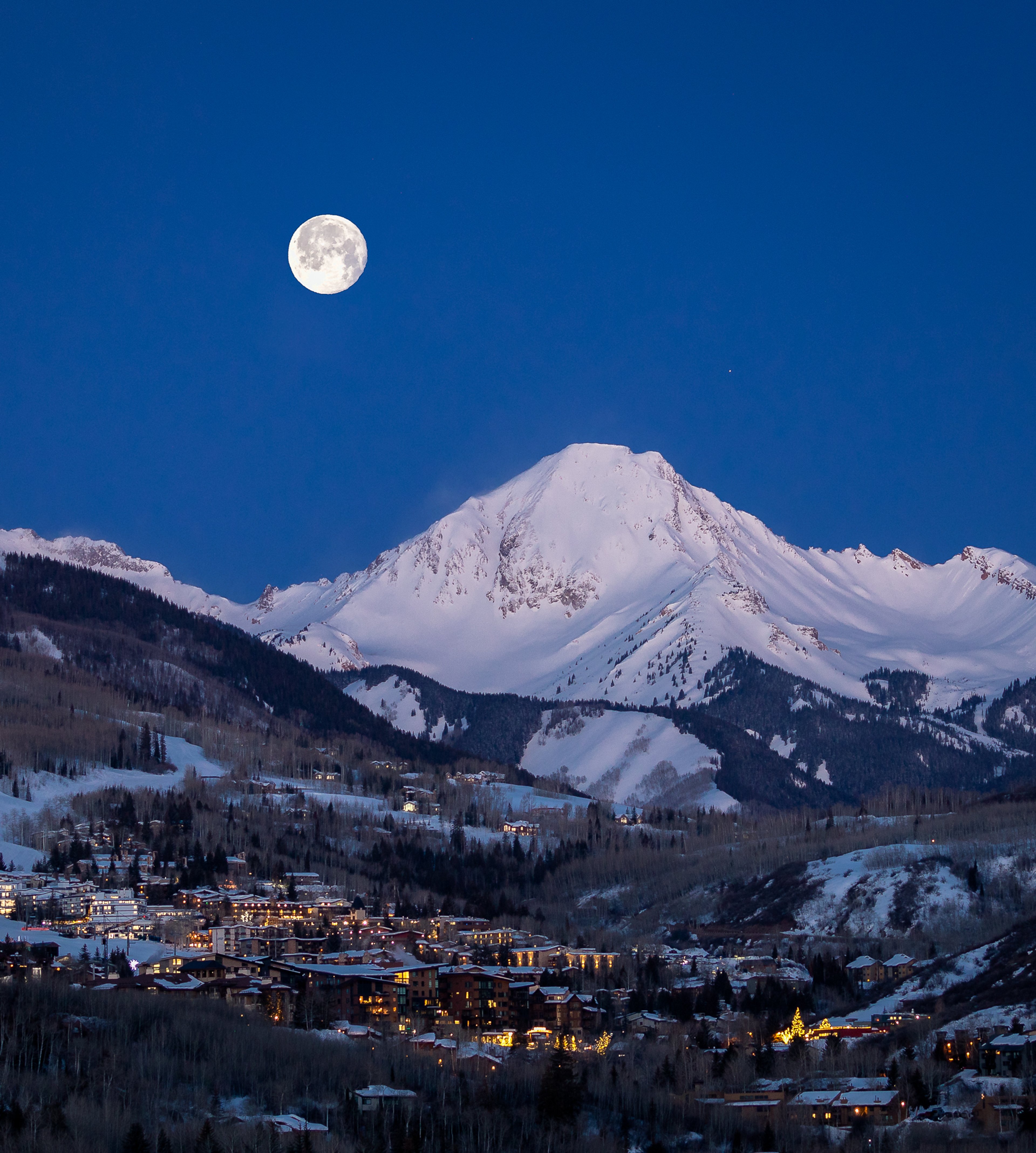
1873 Three members of one of Hayden’s teams make the first recorded climb of Snow Mass Mountain (originally two words), which they name after the large permanent snowfield on the peak’s east side. A 14-thousand-foot peak looming over what is now Snowmass Village, the Utes called the often cloud-shrouded mountain Cold Woman; they believed that it caused bad weather. Snowmass Village is named after the peak.
1874 Henry Gannett, a member of one of Hayden’s survey teams, named Mount Daly for Augustus Daly, the president of the National Geographic Society. The survey team also named Capitol Peak for its supposed resemblance to the U.S. Capitol.
1879 Tensions between the Utes and whites come to a head during the “Meeker Massacre”, otherwise known as the “Meeker Incident”. After being forced to accept domestic labor and Christianity over their traditional nomadic way of life, Ute men revolt against the Indian agency near present day Meeker, CO, killing Indian Agent Nathan Meeker (who was known to be hostile towards the Utes and their traditions), eight employees, and two other civilians, while taking Meeker’s wife and daughter hostage. The same day, Utes engage nearby U.S. cavalry troops in a battle that lasts several days and claims the lives of 14 soldiers. The violence — labeled a "massacre" by Colorado newspapers — becomes the catalyst for the Utes' expulsion from the state.
1881 By 1881, the U.S. government forcibly removes the Ute people from their ancestral homeland, relocating them to reservations in Utah and Southern Colorado. This opens millions of acres of Western Colorado, including the Roaring Fork Valley, to white settlement, ranching, and mining, lays the groundwork for the towns that eventually become Aspen and Snowmass.
The Ranching Era (mid-1880s–late 1960s)
After the Ute’s removal from the region by 1881, and Aspen’s silver boom went bust in 1893, the town entered an era known as the “Quiet Years,” which lasted through 1936. Ranching supplanted mining as the primary economy in the Roaring Fork and Brush Creek Valleys. Though skiing began to take hold in Aspen starting in the late 1930s, the lifestyle that ranchers established in Brush Creek and present-day Snowmass Village remained largely unchanged until the late 1950s, when the Snowmass-at-Aspen ski area was envisioned.
1876-1894
1876 Colorado becomes the 38th state.
1879 Henry B. Gillespie travels over Independence Pass from Leadville after hearing a rumor of rich silver veins in the region. He petitions for a townsite called Ute City. Several months later in 1880, B. Clark Wheeler and Charles A. Hallam travel to the area and resurvey the town site, naming it Aspen. Silver is discovered in the Roaring Fork Valley and prospectors flood in, leading to the silver boom.
1893 At its peak, Aspen, and surrounding mining towns of Independence and Ashcroft, produce one-sixth of the nation’s silver. At one point, Aspen is Colorado’s third-largest city. Aspen boasts two railroads to serve approximately 13,000 people and the surrounding mining infrastructure. The town is home to three schoolhouses, six fire stations, eight churches, a whopping 14 newspapers, and a three-story brick opera house. In Independence four grocery stories, four boarding houses, and three saloons serve 1,500 people at the peak. In June of 1893, the silver economy collapses when the U.S. Government moves away from silver to the gold standard still used today. The robust population of Aspen declines almost overnight and enteres a period called, “The Quiet Years”. Women in Colorado receive the right to vote, the first state to grant women this right. (Aspen Historical Society, Local History Timeline)
Mid-1880s–1890s Ranching families start to settle in the Brush Creek Valley, some moving from Aspen. Today, Brush Creek Road pays homage to the valley.
1894 The one-room Brush Creek Frontier School opens.
Around 1900 The Erickson family of Aspen builds cabins in the upper Brush Creek Valley as a summer homestead. Later, Dr. Robert Burlingame buys the cabins and uses them as a base for hunting.
Early 1900s
Early 1900s William Stephen Copeland, an immigrant from Canada who arrived in Aspen in 1891, starts the Glendale Stock Farm along Owl Creek Road. For decades the red barn was a landmark, which is now green.
1910 The Hoaglund family moves from Aspen to Brush Creek and starts raising cattle on what is now the Anderson Ranch Arts Center.
1919 William Stapleton buys 160 acres on the Snowmass Divide for $1,000 and uses it for sheep grazing; in 1967, his son Sam (after whom Sam’s Knob at the ski area is named) sells it to ski area developer Bill Janss.
1925 Kate Lindvig, a Danish immigrant who moved to Aspen in 1891 and eventually acquired the land that became Snowmass Falls Ranch in upper Snowmass Creek, rents out cabins and offers meals and horses for hire; it’s likely Snowmass’s first tourist operation.
1938-1955
1938 Hilda Hoaglund Anderson and her husband, Bill Anderson, take over the Hoaglund ranch. A year later, they sell the remaining cattle and start running sheep instead on it what is now Anderson Ranch Arts Center.
1944 The Brush Creek Frontier School closes but still hosts community events until 1967.
1950s Loey Ringquist purchases the Faraway Ranch (originally owned by the Kearns family) from Stella Cerise, which she then operates on her own. The ranch is where the Woodbridge and Seasons Four condos would later be constructed and today’s Faraway Road is named after the ranch.
1955 Pitkin County zones the Snowmass Village area as agriculture, forestry and residential and establishes a minimum lot size of two acres.
Birth of the Ski Area and Ongoing Mountain Developments (1958–present)
Colorado for a suitable place to create a large ski resort. In the late 1950s his friend (and local resident) Kingsbury Pitcher alerted him to the potential of Baldy and Burnt mountains for skiing. Janss originally envisioned eight small villages clustered around the mountain, connected by chairlift, offering the ski-in/ski-out access of a European Alpine resort. The Snowmass Mall remains as the first part of this vision, although the full concept never came to fruition. It was a scramble to the finish line before the resort, then called Snowmass-at-Aspen, opened in December 1967, with construction crews working down to the wire.
1958-1968
1958 Bill Janss purchases the majority of the land at the base of Snowmass, buying up local ranches, and submits a special-use application to the U.S. Forest Service to operate private ski tours on Mount Baldy. The Big Burn is the base of Baldy Mountain (13,114ft). When the founders of the resort were planning names, they didn’t think Brush Creek or Baldy would be a good name for a world class destination.
1961 Janss outlines an action plan: The Aspen Ski Corporation —formed in 1946 to operate Aspen Mountain and, later, Buttermilk—will conduct the mountain exploration while the Janss Corporation will develop the base area, including lodging, restaurants, shops and housing. (Ski magazine, Dec. 1964)
1962–63 The Aspen Ski Corporation starts running commercial guided snowcat ski tours on the Big Burn. The tours run until 1965.
1964 The U.S. Forest Service grants approvals of the Snowmass-at-Aspen Ski Area, and the Janss Corporation announces that it will develop the area in partnership with the Aspen Ski Corporation. (The Janss Corporation also buys Idaho’s Sun Valley ski area from the Union Pacific Railroad.)
1966 American Cement announces it will invest $4.5 million in the Snowmass project (Aspen Illustrated News, Dec. 15, 1966)
1967 At the start of 1967, Owl Creek was a dirt path, no signs of a road, and Brush Creek Road didn’t exist. Between June and December both were created as the roads they are today.
1967 Betty Moore wins a $7,000 lot, first prize in a trail-naming contest for Snowmass-at-Aspen. She proposes three names: Moonshine, Snaggletooth and Velvet Falls. Moonshine and Velvet Falls make the final cut and remain trail names to this day (Aspen Illustrated News, Jan. 5, 1967).
1967 Famed Norwegian skier and Olympic gold medalist Stein Eriksen is announced as ski school director; he moves from Sugarbush, Vermont. Previously, he directed the ski school at Aspen Highlands, 1958 to 1963 (Aspen Illustrated News, Feb. 23, 1967).
1967 Snowmass-at-Aspen opens December 16 as a joint venture of the Aspen Skiing Corporation and the Janss Corporation, with five chairlifts and 50 miles of trails, including the Big Burn, Sam’s Knob, Coney Glade and Campground. A lift ticket costs $6.50. The slopeside Silvertree Hotel opens, as does the West Village (now known as the Snowmass Mall), designed as a European-style village by local architect Fritz Benedict (who, along with Jim Snobble) also scouted Snowmass in the late 1950s with the idea of developing a ski area). Jim Snobble, the first mountain manager, was a ski instructor on Aspen Mountain. Snobble knew the mountain better than most. He used to hide in the trees at the end of the day to see if patrol would spot him on their sweep, earning the nickname “Sneaky”. When he retired in 1984, Upper Powderhorn, his favorite trail, was named “Sneaky’s” in his honor.
1968 In October, the Janss Corporation sells its Snowmass real estate to the American Cement Company, and Bill Janss turns his attention to Sun Valley.
1968 Snowmass passes Aspen Mountain in lift ticket sales (Aspen Illustrated News, March 7, 1968).
1969-1987
1969 The Stump, a 2,200-square-foot base lodge with a ticket office, snack bar and restrooms, opens for the 1969-70 ski season. It is designed and built by University of Colorado architecture students. The Ullrhof restaurant also opens at the base of the Big Burn.
1970 The small restaurant at Sam’s Knob is expanded and Café Suzanne opens.
1973 Alpine Springs chairlift opens in December, providing access to the new Alpine Springs terrain, as well as the Wood Run triple lift. The High Alpine restaurant also opens (Aspen Times Weekly, September 1973).
1978 High Alpine chairlift opens.
1979–80 Gwyn and George Gordon open their restaurant in the space at High Alpine.
1981 Ski patroller Roberto Gasperl dies in an avalanche on March 31 while doing control work; the chute he died in, near the Hanging Valley Wall, was renamed Roberto’s.
1984 Jon Reveal takes over as mountain manager from Jim Snobble.
1984 The double-black-diamond Hanging Valley Wall opens.
1985 One of the cabins built by the Ericksons around 1900 and later purchased by Dr. Robert Burlingame is moved from above what is today the Spider Sabich race area at Snowmass to just above today’s Scooper surface lift. The reason for its relocation? Skiers are jumping over it, and there are liability concerns.
1986 The Fanny Hill and Coney Glade high-speed quad chairlifts open.
1987 The Big Burn quad chairlift opens.
1988-2005
1988 Snowboarding is allowed for the first time on Snowmass. Aspen Mountain remains closed to snowboarders until 2001.
1994 A chairlift to the top of Burnt Mountain and new trails are approved, but the lift is not built, nor are any trails added until 1998.
1995 Two Creeks base area at Snowmass opens, including the Elk Camp high-speed quad lift that whisks riders to the top of Elk Camp in 10 minutes.
1997 The Cirque poma opens, bringing skiers and snowboarders to an elevation of 12,510 feet, giving Snowmass the most lift-served vertical in the U.S. (4,406 feet).
1998 The intermediate run off the Cirque lift is renamed Rocky Mountain High, in tribute to the late John Denver. John Denver lived in Aspen in the late 1970s and wrote several of his iconic songs there, including Rocky Mountain High, based on inspiration from the natural landscape.
1998 Long Shot opens on Burnt Mountain. The run is accessed by a short hike from the top of the Elk Camp lift and provides a unique opportunity for intermediate skiers to experience backcountry-style terrain Plus, at 5.3 miles, its Colorado’s longest ski run.
1998 The Lynn Britt Cabin is built near the bottom of Hal’s Hollow run in honor of Lynn Britt, a ski instructor who died from cancer at age 40 in 1986. It opens for snowcat-accessed dinners.
2001 The National Disabled Veterans Winter Sports Clinic comes to Snowmass, bringing with it the largest disabled veterans winter clinic in the world. It still visits annually.
2005 The six-passenger Village Express lift to the top of Sam’s Knob opens, as well as the “Skittles” pulse gondola, connecting the Snowmass Mall and Base Village.
2006-2018
2006 Snowmass opens its first gondola, which goes from Base Village to Elk Camp, on December 16.
2007 In November, the new 25,000-square-foot Treehouse Kids Adventure Center opens.
2007 The Elk Camp Meadows beginner and lifts open for the first time, in December, at the top of the gondola, allowing never-ever skiers and snowboarders to experience being higher up on the mountain.
2008 A high-speed quad replaces the double-seat Sheer Bliss lift (which had opened in 1975 as the Couloir lift).
2012 The new Elk Camp restaurant atop the Snowmass gondola replaces Café Suzanne, which is torn down.
2012–13 230 acres of additional terrain is opened on Burnt Mountain, making Snowmass the second-largest Colorado ski area behind Vail.
2015 The High Alpine double chair is replaced by a relocated, high-speed quad.
2018 The Breathtaker Alpine Coaster and Lost Forest debut at Elk Camp.
2020-2026
2020 The Big Burn lift is upgraded to a six-passenger chair.
2020 The ski area shuts down on March 14 (with ski areas statewide, per Governor Jared Polis’s order) as the Covid pandemic takes hold. The original shutdown order was for one week, but resorts never reopened that spring as the outbreak intensified. The ski area reopened as usual for the 2020/2021 winter season.
2020–21 High Alpine’s cafeteria-style restaurant reopens in December under Aspen Skiing Company’s operation.
2021 Gwyn’s, the sit-down restaurant at High Alpine, is replaced by the Aspen Skiing Company–operated Alpin Room in December.
2023 A new master plan for the ski area is accepted by the U.S. Forest Service in January. It calls for, among other things, a gondola to replace the Village Express lift and construction of the Burnt Mountain chair approved in 1994 but never built. Also included are new glades, two new restaurants (on Gunner’s View run and near the base of Alpine Springs) and additional snowmaking.
2024–25 A longer and repositioned Coney Express high-speed quad replaces the former Coney Glade lift.
2024 The remodeled Lynn Britt Cabin reopens as simply The Cabin in December, hosting après ski parties and snowcat-accessed dinners.
2025–26 The Elk Camp six-seater lift replaces the former quad, and the Cirque T-bar replaces the original poma to the top of the ski area.
2026 A new Ullrhof restaurant, rebuilt from the ground up, debuts in the fall.
Beyond Skiing: Other Outdoor Recreation (1972-present)
A $6.5 million update of the entry to Snowmass Town Park and the Snowmass Rodeo grounds debuts, including a reoriented arena and new grandstands.
1972-1994
1972 Back nine holes are added to the existing front nine at the Snowmass golf course (Aspen Times, March 2, 1972)
1979 The now-annual Golden Leaf Half Marathon debuts. The 13.1-mile course starts at the Snowmass ski area and follows the Government Trail before ending in Aspen.
1985 The now-annual Owl Creek Chase, a 21-kilometer cross-country ski race that starts in Snowmass Village and end in Aspen, debuts (the race now offers different course lengths).
1993 Local businessman Boone Schweitzer founds the annual Trashmasters charity golf tournament, which raises money for college scholarships for students in the Roaring Fork Valley. Though the first tournament was held in Aspen, most subsequent events take place at the Snowmass Club golf course.
1994 The Tom Blake Trail is created. Tom and Mary Beth Blake, who moved to Snowmass in 1969 are very involved within the community. Tom is the General Manager of the Snowmass Resort Association at its start. He is also on the Pitkin Board of County Commissioner from 1980-88 and on Snowmass Town Council from 1990-94. After Tom passes in 1994, Mary Beth helps carve out the popular trail in recognition of his advocacy for trail systems.
2004-2014
2004 The new James Engh-designed Snowmass Club golf course opens.
2007 The Snowmass Recreation Center opens.
2011 Pitkin County Open Space and Trails acquires a 2,500-acre parcel of the former Droste Ranch for hiking, biking and equestrian trails, and renames it Sky Mountain Park.
2012 Valhalla downhill mountain biking trail opens on Snowmass, a precursor to the Snowmass Bike Park.
2014 The International Mountain Bicycling Association designates the Roaring Fork Valley as a Bronze-Level Ride Center for its cycling infrastructure.
2016-2020
2016 The lift-served Snowmass Bike Park opens, with 17 miles of gravity served downhill trails, from beginner flow trails to ones with expert freeride features like bridges, jumps, and berms. While the surrounding resort area boasted over 50 miles of cross-country trails at the time, the dedicated downhill-only trail system was much more compact than it is today. Following the approval of the park's master development plan, Aspen Snowmass aggressively expanded the system year-over-year. Today, the bike park spans over 25 miles of purpose-built downhill trails, integrated into a valley-wide system that features hundreds of miles of multi-use singletrack.
2016 The purpose-built Seven Star mountain biking flow trail opens in October on the former Seven Star Ranch.
2018 The Lost Forest debuts at the ski area. The on-mountain activity center at Elk Camp includes the Breathtaker Alpine Coaster, a zip line, ropes course, and climbing wall.
2019 The Audi Snowmass 50 Mountain Bike Race debuts, with riders lapping 25 miles of singletrack around Snowmass. It replaces the former Power of Four MTB race.
2020 The Roaring Fork Valley is designated Colorado’s only Gold-Level Ride Center by the International Mountain Bicycling Association for its wide range of trails, cyclist amenities and community support.
Snowmass Music, Celebrations and Events (1969-present)
Since its beginning, Snowmass has developed a vibrant schedule of events, some wild and quirky, some beloved and longstanding, both on the ski area and off. Many events have lasted for decades, while some bowed out early on. Events keep Snowmass vibrant, unique, and fun.
1969-1975
1969 The first Snowmass Ski and Swim contest takes place in April on Fanny Hill with nine contestants. It’s the precursor of the Ski Splash, an immensely popular competition in the 1970s that was part of Aspen’s annual Wintersköl celebration. Costumed skiers would launch into the El Dorado (a hotel adjacent to the Silver Tree) pool alongside Fanny Hill.
1970 John Denver is hired to play regularly at the Leather Jug, and English style pub on the Snowmass Mall.
1972 The Snowmass Resort Association erects a 1,200-seat tent for concerts and banquets at the end of the Snowmass Mall, and it hosts musical acts like Jimmy Buffett and Emmylou Harris throughout the decade.
1973 The Snowmass Rodeo debuts on June 13, founded by local outfitter Doug McLain.
1975 Snowmass becomes the official summer home of Ballet West, a Salt Lake City–based dance company. The group returns throughout the 1970s.
1975 The annual Snowmass Balloon Festival launches as one of the highest-altitude balloon events in the U.S. Featuring 25+ balloons every September, the Snowmass Balloon Festival is one of Snowmass’ signature festivals. The Snowmass Balloon Festival celebrated 50 years in 2025.
1980-1984
1980 The Anderson Ranch Picnic and Auction debuts, brings people together for an afternoon of fun and excitement. Silent auctions feature over 150 works of art by top contemporary artists and locals alike. Alongside the auction is engaging art-based activities for all ages, delicious picnic-style food, and live music. A fundraiser at heart, all proceeds from the day directly benefit Anderson Ranch educational programs. The program still takes place today.
1980–88 A stage of the Coors Classic bike race is held annually in Snowmass Village. Cyclists must complete a circuit of 28 laps that includes a climb up Snowmelt Road (the steepest grade of the nine-day race), a descent on Brush Creek Road and a turn on Wood Road back to the start.
1982 Snowmass hosts its first official Mardi Gras celebration, after a group of visitors from New Orleans come to Snowmass to escape the Mardi Gras crowds at home but still want to party. The Snowmass Resort Association organizes the first official Snowmass Mardi Gras celebration, complete with beads, costumes, and lots of color. The event takes off in subsequent years thanks to nationwide advertising and live television spots of the parade and bead toss on ABC affiliate stations in New Orleans, Baton Rouge, Houston and Denver. (Aspen Times; February 8, 2024)
1982 An annual Oktoberfest celebration starts on the Snowmass Mall. It takes place off and on through 2004, and again in 2009. The event is resurrected in 2025 in Snowmass Base Village.
1983 In June, the Aspen/Snowmass International Wine Classic launches, thanks to Aspen wine shop owner Gary Plumley and Snowmass restaurateurs Bob and Ruth Kevan (Chez Grandmere). The several locations included a tent in a parking lot near Snowmass Village. In 1987 Food & Wine magazine, which joined as title sponsor the previous year, rebranded the event as the Aspen/Snowmass Food & Wine Classic and in 1992 moves all of the festival to Aspen (Food & Wine, 40th anniversary issue timeline).
1984 The Snowmass Ski Splash is discontinued by the Aspen SkiCo for liability reasons.
1985-1996
1985 A week-long spring carnival dubbed Banana Days started to bring in more business toward the end of the ski season. Festivities included banana-eating contests, banana juggling, banana drink contests, a boat race and an on-mountain scavenger hunt. It lasts until the early 2000s.
1992 Snowmass Summer of Free Music Series is started by locals. Today the event is known as the Snowmass Free Concert Series taking place on Fanny Hill every Thursday evening from June through August. A longtime local favorite, the outdoor series showcases a diverse range of live music—from rock and alternative, Latin to bluegrass, and beyond.
1993 Jazz Aspen Snowmass moves its annual June music festival to Snowmass Village, hosting concerts for four days in a 2,000-seat circus tent at the Snowmass Rodeo Lot.
1994 One World music festival, previously held in Crested Butte, is held over Labor Day weekend. Performers include Ziggy Marley, War, Bunny Wailer, Burning Spear and James Brown. Attendees rode the Fanny Hill chair to the three-day fest’s stage at the base of Coney Glade.
1995 Jazz Aspen Snowmass starts a new Labor Day music festival, held near the Coney Glade chairlift. Willie Nelson, Maceo Parker and Buddy Guy headline.
1996 Jazz Aspen Snowmass Labor Day festival moves to Town Park.
2003-2015
2003 Jazz Aspen Snowmass’ annual June festival moves back to Aspen.
2004 Snowmass debuts several new events: The Chili Pepper and Brew Fest, the Snowmass Wellness Experience, Massive Music and Movies, and a relaunch of Oktoberfest.
2006 The Snowmagical Family Fun Fest celebrates its 25th anniversary. It dissolves soon after.
2013 The name of the Chili Pepper and Brew Fest is changed to the Snowmass Mammoth Fest, and the location moves from the Snowmass Mall to Town Park.
2013 After a 15-year hiatus, the Deaf Camp Picnic, an event hosted by the Aspen Camp for the Deaf and Hard of Hearing, returns to Snowmass Village. Performances include the Nitty Gritty Dirt Band, Billy Dean, Starwood and a tribute to John Denver, formerly a mainstay of the picnic.
2015 Heritage Fire, a celebration of whole-animal, open-fire cooking comes to Snowmass, taking over lower Fanny Hill for an afternoon culinary festival. It becomes a popular annual summer event.
2016-2026
2016 The Snowmass Rendezvous, a spirits and libations festival debuts on the Snowmass Mall. Over the years it expands to Base Village and includes wine, cocktails and artisan vendors.
2017–2018 Snowmass celebrates the ski area’s 50th anniversary with a season-long slate of events, including a kick-off weekend of $6.50 lift tickets for a day, parties, concerts, a gala and a reprisal of the Banana Days scavenger hunt popular in the 1980s.
2018 Snowmass hosts its first Toyota U.S. Grand Prix (January 10–14), an Olympic-qualifying event for U.S. Snowboard Team and U.S. Freeski Team athletes. Shaun White scores a perfect 100 in the halfpipe, only the third perfect snowboard halfpipe score ever.
2018 Cidermass, an annual festival celebrating hard cider, debuts in September on the Snowmass Mall. Over the years the festival expands to include N/A beers, spirits, and other libations.
2020 The Covid pandemic changes what summer in Snowmass looks like. The Snowmass Rodeo cancels its season, as does the Jazz Aspen Snowmass Labor Day festival. Other cancellations include Cidermass and the Golden Leaf Half Marathon. Drive-in movies are held in Town Park. Most socializing and dining take place outdoors.
2025 The Snowmass Rodeo celebrates 50 years.
2026 The Mountainside Music Festival, a three day kick off to summer music festival, debuts on Fanny hill, featuring American Authors, Richy Mitch & The Coal Miners, and Pecos & The Rooftops with special guest The Talbott Brothers.
Snowmass Base Village (1979–present)
Long anticipated, Base Village took more than 25 years to come to fruition. It has a long history of starts and stops but as of 2027 will be near completion.
1979-1999
1979 A plan to develop a base village is submitted by the Snowmass Co. Ltd. after its purchase of 2,900 acres of undeveloped land and other assets in 1978. The plan includes a 10- to 12-story luxury hotel.
1980 Neighbors consider the proposed base village out of scale and file suit to stop it.
1983 The Snowmass Co. Ltd. submits a revised plan for a smaller base village.
1983–84 Jim Chaffin and Jim Light receive approval from TOSV Town Council to develop a base village at the ski area with 300 units. It is never built after financial partner Bowery Savings Bank reneges on its $30 million funding commitment. (Aspen Daily News, July 17, 2017).
1988 The Snowmass Land Co., started by Chicago businessmen Gene Golub and Norman Perlmutter, buys 1,879 acres of undeveloped land around Snowmass Village from the FDIC (which had acquired it in 1987 from Chaffin and Light’s Snowmass Co. Ltd.). The land is zoned for a hotel and hundreds of condos (Aspen Times, Aug. 19, 1988)
1999 Aspen Skiing Company announces an agreement to buy 500 acres in and around Snowmass, including the 15-acre Base Village property (which it co-owned), from the Snowmass Land Company for $11 million (aspenjournalism.org).
2001-2015
2001 Aspen Skiing Company announces a partnership with Intrawest to develop the new Base Village at Snowmass.
2004 TOSV Town Council approves the Base Village application, which includes 600 residential units, a new lift system and commercial buildings.
2005 In January, a Westin is announced as the flagship hotel of Base Village. It is never built, however, replaced by the Viceroy when Related WestPac takes control.
2005 In February, by a small margin, Snowmass Village voters defeat a citizen referendum to halt Base Village. Excavation begins in the spring but soon halts because of a U.S. Army Corps of Engineers 404 permit issue related to wetlands. The issue is overruled and work resumes.
2007 Intrawest and the Aspen Skiing Company sell Base Village’s commercial development to Related WestPac (a joint venture between New York–based Related Companies and California developer Pat Smith) for $169 million. Related WestPac already owns the Snowmass Mall and the Snowmass Center.
2008 The first phase of Base Village opens, including the Capitol and Hayden Peak lodges; commercial spaces for ticket sales, rental and retail; and the Treehouse Kids Adventure Center that opened the previous year.
2009 The Viceroy Hotel opens on November 25 with 173 rooms, a restaurant, outdoor pool and full spa; it’s one of the first LEED silver-certified hotels in North America.
2010 A judge places Base Village in receivership at the request of four European banks, the project’s primary lenders.
2012 A subsidiary of Related, Snowmass Acquisition Company, buys back Base Village from the lenders for $90 million.
2015 TOSV Town Council approves an amended PUD for Base Village.
2016-2026
2016 A new ownership consortium—consisting of Aspen Skiing Company, East West Partners and KSL Capital Partners—closes on the purchase of Base Village for $56.5 million; the deal includes all remaining development parcels, all commercial spaces in Base Village, the Snowmass Hospitality property management company and the Viceroy Hotel, including the unsold condos within the hotel.
2017 Construction restarts.
2018 In December, the Limelight Hotel Snowmass, the private Snowmass Mountain Club (in the Limelight) the Lumin (condos) and Building 6 (now The Collective Snowmass, a hub for community events and activations) open, along with the central plaza (the ice rink in winter), known as The Rink. A grand opening on December 15 includes concerts, an ice show and fireworks.
2019–20 One Snowmass residences open.
2022–23 The Havens at Fanny Hill open. These 10 luxury residences are located slopeside on lower Fanny Hill and considered part of Base Village development.
2023 The Electric Pass Lodge opens with 52 residences. Electric Pass Lodge runs on 100% renewable energy, the first building of its kind in Snowmass.
2024 The Aura building opens with 21 residences.
2024–25 The Cirque Residences at the Viceroy open—48 luxury residences in a new tower.
Other Snowmass History (1964–present)
Snowmass Village grew through the late 1960s and 1970s into a scrappy mountain town with its own police force, employee housing, and beloved local institutions like the Anderson Ranch Arts Center, The Stew Pot, and the Little Red School House. Even the era's darker chapters, from Ted Bundy's crimes to Spider Sabich's death, left a distinctive mark on the town’s character. Through the 1980s and 1990s the community matured to include a conference center, the Snowmass Chapel, hotels, and civic groups like the Snowmass Rotary Club. Recent years have brought reinvestment and redevelopment, including major hotel renovations and upgrades to Snowmass Town Park and the Snowmass Rodeo grounds.
1964-1972
1964 The Maroon Bells-Snowmass Wilderness area is formed by the 1964 Congressional Wilderness Act at 174,000 acres.
1966 Ceramic artist Paul Soldner founds Anderson Ranch Arts Center on the former Hoagland sheep ranch, where Hilder Hoaglund Anderson grew up and later operated with husband Bill Anderson. The Janss Corporation buys the ranch in 1966, then deeds it to the nonprofit Snowmass Arts Foundation, which leases it to the Soldner and the Arts Center.
1967 In October, the Snowmass Villager, a supplement to the Aspen Times, launches.
1969 The first two of 15 planned employee housing buildings open on Brush Creek Road. Each building has six units exclusively for workers of Snowmass-at-Aspen. Snowmass businesses will rent the units, then sublease them to employees. All are furnished studios designed for two people, other than one one-bedroom unit designed for four occupants (Snowmass Villager, March 13, 1969).
1969 Unhappy with the lack of police surveillance and protection from the Pitkin County Sheriff’s department, Snowmass hires its first police office, Fred MacKintosh, formerly a Pitkin County law office (Aspen Illustrated News, Aug. 6, 1969).
1972 Bob and Ruth Kevan open the Stew Pot on the Snowmass Mall. The Stew Pot still serves customers today, utilizing some of the same soup and stew recipes from day one.
1975-1976
1975 Notorious serial killer Ted Bundy murders Caryn Campbell, a young nurse staying at the Wildwood Inn (today employee housing for the Viewline Resort Snowmass). She disappears while walking to the elevator to go back to her room. A month later her body is found on Owl Creek Road. In November 1976 over 30 investigators from around the country, all looking into disappearances and murders convene in Aspen and determine Bundy is responsible for them all. Colorado authorities charge Bundy with Caryn Campbell’s murder, and in January 1977 Bundy is brought back to Colorado for trial. He represents himself, a ploy to get the bailiff to remove his handcuffs during court. During a recess, Bundy is allowed to use the law library on the second floor of the Pitkin County Courthouse to research his defense. He leaps from the second story window, evades capture and flees for the mountains. After six days hiding out on Aspen Mountain, he is captured and sent to the Glenwood Springs jail. For several months he plans his escape. After shedding 35lbs and cutting a hole in the ceiling of his cell with a contraband saw, he shimmies out and walk away from the courthouse. He is later arrested and charged with the Chi Omega sorority murders. He is sent to the electric chair January 24, 1989. (Denver Public Library Special Collections and Archives)
1975 The Tower Restaurant, a mainstay of the Snowmass Mall since 1967, is purchased by a group that includes John Denver. It hosts magic shows at the bar from 1975 into the 1990s and closes in 2004. Snowmass magician Doc Eason, who continues to perform in Snowmass, get his start here.
1976 Dogsledder Dan MacEachen opens Krabloonik, moving the dog teams he had been gifted by Stuart Mace from Ashcroft to Snowmass Village.
1976 Former Olympic and pro skier Spider Sabich, after whom the race arena near Coney Glade is named, dies at age 30. He is shot on March 21 at home in Aspen by girlfriend Claudine Longet. Longet shoots Sabich in the stomach with a pistol while he was in the shower, although she claimed the gun discharged accidentally while Sabich was showing her how to use it. He bled to death before help arrived. The subsequent trial illuminates a tumultuous relationship filled with drug use, parties, and a wild world of fame. Longet is ultimately convicted of misdemeanor negligent homicide and 30 days in jail.
1977-1988
1977 The Town of Snowmass Village is incorporated as a town, 10 years after the opening of the ski sea.
1977 Snowmass resident Gracie Oliphant builds her namesake log cabin in today’s Two Creeks area, leasing land from Jim Chaffin and Jim Light for $10 a year. She constructed it to host ski-in/ski-out dinners.
1977 The former Brush Creek Frontier School, which closed in 1944, is refurbished and reopens as the Little Red School House, an early childhood center that still operates today.
1978 Jack Schuss, Snowmass Village’s first mayor, and Dick Slaughter, one of the town’s first planning commissioners, start the Snowmass Sun.
1984 Developers submit plans for the Faraway Ranch development, to include a 150-room hotel, condos, townhomes, homes and employee housing on 70 acres.
1985 The Snowmass Conference Center opens in June between the Silvertree and the Wildwood Hotel; at 34,500 square feet, it’s said to be the largest such facility in the Colorado Rockies. (Aspen Daily News, June 15, 1985)
1987 A study to explore the feasibility of an aerial tram linking Snowmass and Aspen is funded by Snowmass Village, Aspen, Pitkin County and the Aspen Skiing Co. (Aspen Times, Jan. 22, 1987).
1988 The Snowmass Chapel opens.
1991-2024
1991 The Rotary Club of Snowmass Village is chartered by Rotary International and includes 50 percent women, unusual at the time. The club now holds its annual fundraiser, the Snowmass Wine Festival, every September.
1997 The Timbermill, a popular après-ski spot and live-music venue at the slopeside end of the Snowmass Mall, closes when the Aspen Skiing Company takes over the space and reopens it as the Cirque bar and restaurant.
2011 The Silvertree and Wildwood hotels and the Snowmass Conference Center are sold to Starwood Capital Group Global for $38.75 million.
2012 After extensive renovation, the Silvertree reopens in November as a Westin hotel. The adjacent Wildwood Lodge underwent its own renovation, also reopening in November.
2021 The slopeside Westin Hotel (formerly the Silvertree) reopens in December as the Viewline Resort Snowmass (part of Marriott’s Autograph Collection) after a multi-million dollar renovation.
2024 Krabloonik, the long-time dog-sledding outfitter and restaurant locale, closes. The Town of Snowmass Village, which owns the land, orders the business to cease operating after determining that owners Gina and Danny Phillips violated some of the best practices for animal care, a condition of the lease.
2024 A $6.5 million update of the entry to Snowmass Town Park and the Snowmass Rodeo grounds debuts, including a reoriented arena and new grandstands.
Explore More
Sustainable Tourism
See details about Sustainable Tourism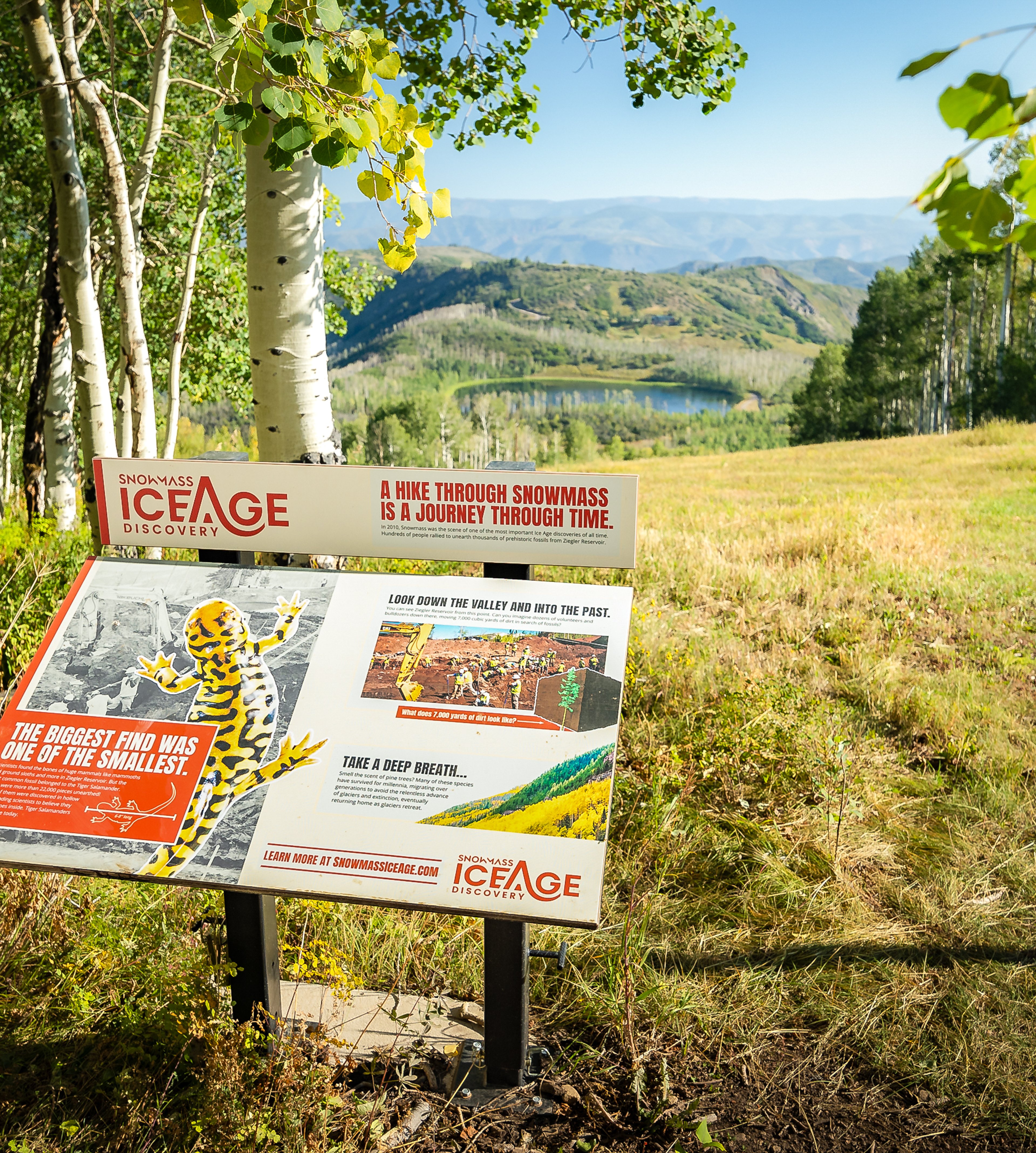
Snowmass Ice Age Discovery
See details about Snowmass Ice Age Discovery